7 Min Read
If you've seen headlines about a Georgia ADU bill making it easier to build a backyard home, you're not imagining it. House Bill 1166 picked up real momentum in the 2026 legislative session and had housing advocates across the state paying close attention. It also stalled out before reaching the governor's desk, which has left a lot of Atlanta homeowners unsure of where things actually stand.
This guide walks through what HB 1166 proposed, what happened to it, and what the rules for building an accessory dwelling unit in Atlanta look like right now, regardless of the bill's outcome.
Use the links below to jump to the sections you want to read:
- What Is Georgia House Bill 1166?
- Did HB 1166 Pass and Become Law?
- What Would HB 1166 Have Changed for Atlanta Homeowners?
- Can You Build an ADU in Atlanta Right Now?
- Do You Need a Permit to Build an ADU in Georgia?
- Will Georgia Pass a Statewide ADU Law in the Future?
- Can You Rent Out Your ADU or Use It for an Aging Parent?
- Frequently Asked Questions
What Is Georgia House Bill 1166?
HB 1166 was introduced by Rep. Tangie Herring (D-Macon) with co-sponsors from the Athens and Atlanta areas. The original goal was straightforward: create one statewide accessory dwelling unit law instead of leaving the question to whatever rules a particular city or county happened to have on the books.
The bill would have prevented local governments from blocking small detached homes of 400 square feet or less on residential lots, with an exception carved out for historic districts. Early drafts ran into pushback over concerns that large corporate investors could use the new allowance to add ADUs to properties they already owned, then rent or resell them for profit. When the House Governmental Affairs Committee unanimously advanced a substitute version on February 25, 2026, it addressed that concern by adding language to block institutional investors from building ADUs on homes they own, while also requiring that any new unit comply with state and local utility connection rules.
Herring told reporters covering the committee vote that the bill was meant to help families that want to build a small home for aging parents, adult children, or a caregiver who needs to live close by. That framing is part of why the bill found support well outside its original sponsors, picking up backers among affordable housing groups and several Atlanta-area legislators.
Did HB 1166 Pass and Become Law?
No. HB 1166 did not become law during the 2026 session. It passed the Georgia House on Crossover Day, March 6, 2026, by a vote of 111 to 50, then moved to the Senate State and Local Government Operations Committee. The committee took it up, but the bill never reached a full Senate floor vote before Sine Die, the last day of the session, which fell in early April 2026.
After the original ADU provisions stalled, the Senate later repurposed the HB 1166 bill number for an unrelated measure dealing with financial receivership for distressed cities. Since Georgia's General Assembly runs on a two-year cycle, 2026 was the second year of the current biennium. That means HB 1166, in its original form, is no longer active. Any version of this proposal that moves forward would need to be reintroduced as new legislation starting with the 2027 session.
What Would HB 1166 Have Changed for Atlanta Homeowners?
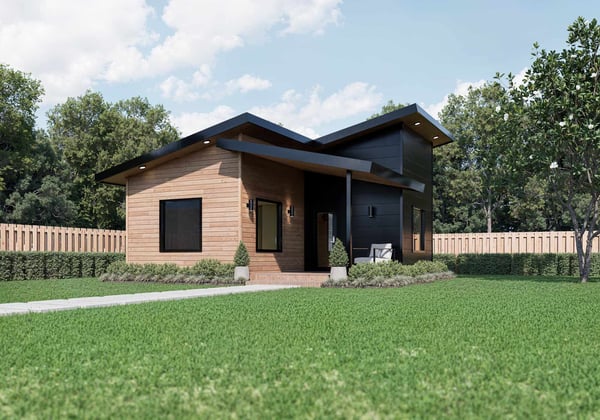
For homeowners already inside Atlanta city limits, not much would have changed. Atlanta already permits ADUs, so the bill wouldn't have unlocked anything new here. The impact would have been on the surrounding counties and smaller cities across Georgia that currently restrict or outright prohibit small accessory dwelling units. The bill would mean ADUs of at least 400 square feet would be allowed.
The bill passing would have been a meaningful shift for the region as a whole. Right now, Georgia ADU laws vary from city to city. HB 1166 would have created a baseline that every county/city would follow, similar to the statewide ADU laws already in place in states like California and Oregon. For families considering a move within metro Atlanta, specifically to gain ADU flexibility, that framework would have removed a lot of current confusion.
The bill's failure doesn't reverse anything Atlanta homeowners are already allowed to do. Backyard homes like the ones HB 1166 targeted already exist, and that won't change either way. It just means the patchwork stays in place for now, and anyone building outside Atlanta's existing ADU-friendly zones still needs to confirm what their specific city or county permits before making any plans.
Can You Build an ADU in Atlanta Right Now?
Yes, you still can. Atlanta's ADU ordinance has been in place since 2019 and operates independently of whatever happens at the state level. Atlanta allows detached ADUs on R-4, R-4A, and R-5 zoned lots without a special variance or rezoning request.
The current Atlanta ADU size limit is 750 square feet, or 50% of the primary home's heated floor area, whichever is smaller. Beyond that size cap, a few other rules shape what fits on a given lot:
- Detached units must sit at least 10 feet from the rear property line and 5 feet from the side property lines.
- Height is capped at 20 feet, which generally rules out a full second story but leaves room for vaulted ceilings or a loft.
- The structure can cover no more than 25% of the rear yard.
- There's no owner-occupancy requirement, so the primary home and the ADU can both be rented out without the owner living on-site.
- The ADU must be a complete, self-contained living space with its own kitchen, bathroom, sleeping area, and a separate entrance, which is what distinguishes it from a guest house.
If your property sits outside Atlanta's city limits, the size limits, setbacks, and occupancy rules can look different from what's listed above. Fulton County and several other surrounding jurisdictions have their own separate ordinances too. Before you get attached to a specific floor plan, it's worth confirming the rules for your exact address with your local planning department or starting with a feasibility review so you know what your lot supports.
Do You Need a Permit to Build an ADU in Georgia?
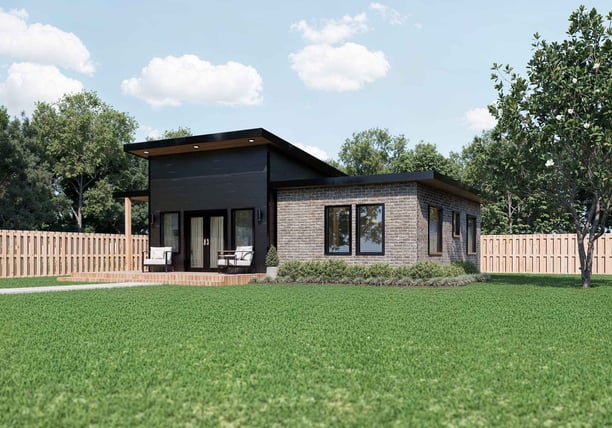
Yes, you need a permit in every Georgia jurisdiction. A building permit is required regardless of the unit's size, and that permit process covers structural plans, electrical and plumbing work, and a final inspection before you can legally occupy the space.
In Atlanta specifically, a complete and compliant submission to the city's Office of Buildings typically clears review in four to eight weeks. Incomplete plans or unresolved zoning questions push that timeline out considerably, which is one of several reasons it pays to work with a team that already knows the local requirements. A surprising number of permitting delays come down to a handful of avoidable mistakes, like submitting plans before confirming setback requirements or choosing finishes that don't match what's actually feasible on the lot. Timing matters too. The time of year you start can shift your overall build schedule by months once you factor in permit review backlogs and contractor availability.
Will Georgia Pass a Statewide ADU Law in the Future?
It's a real possibility, and HB 1166 likely won't be the last attempt. The bill's unanimous advancement out of committee, paired with its lopsided 111-50 win in the House, suggests the underlying idea has support that crosses party lines. A related bill, HB 400 (the CHOICE Act), aimed to give cities and counties grant incentives for allowing duplexes, triplexes, and other denser housing types. It also failed to reach a floor vote in 2026. Taken together, these efforts point to a legislature that's actively wrestling with Georgia's housing affordability questions, even if the specific bills haven't crossed the finish line yet.
If a similar bill is reintroduced in the 2027 session and becomes law, it would most directly affect homeowners outside Atlanta's existing ADU-friendly zoning districts. For homeowners in Atlanta and the surrounding areas, a statewide law would make building ADUs more straightforward and remove the current legal red tape.
Can You Rent Out Your ADU or Use It for an Aging Parent?
Yes, you can do both under Atlanta's existing rules. Plenty of homeowners in Atlanta right now are using ADUs for rental income and as space for aging parents. Before you commit to building an ADU, note that long-term rental laws are fairly relaxed under current Atlanta zoning, as there is no owner-occupancy requirement.
Short-term rentals are a different story. If you're picturing your ADU as an Airbnb, you'll need to register separately under the city's short-term rental ordinance. The requirements there have shifted more than once over the past few years, so it's worth checking the current version before you count on that income. And no matter which path you choose, the ADU stays tied to your property. Georgia doesn't allow you to subdivide it or sell it off on its own, so think of it as something that adds value to the home you already own rather than a separate piece of real estate.
Ready to Build Your ADU in Atlanta?
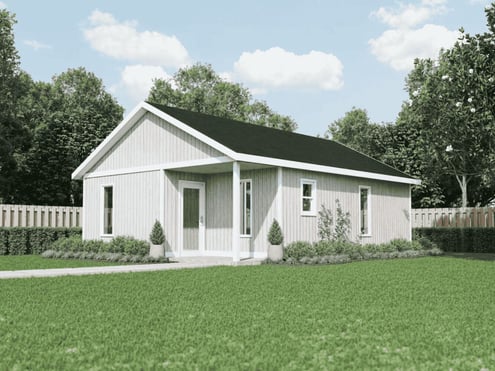
Legislation will keep moving at its own pace, but the path to building a backyard home in Atlanta is already open today. SmartSpaces ADUs has spent years guiding East Atlanta homeowners through zoning, permitting, and construction for exactly the kinds of projects HB 1166 was trying to make easier statewide: homes for aging parents, space for adult children, and rental units that bring in real income.
Browse our ADU plans to see what fits your lot, or build out your own configuration and get real cost estimates with our Configurator Tool. To see ADUs we've built for families like yours, check out our portfolio.
Contact Us
Reach out to our team to get started with building your ADU and review financing options.
Frequently Asked Questions
.jpg?width=352&name=Smart%20Spaces%20ADU%20(4).jpg)