6 Min Read
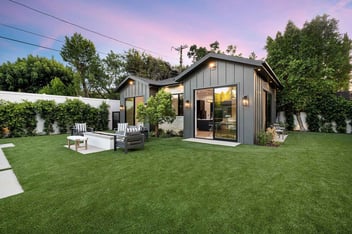
Most families don't plan for multigenerational living until something changes, like a parent's health shifts or an adult child moves back home. When that happens, everyone involved has to make adjustments. While moving in together has its benefits, it can make a home crowded really fast. So how can you give everyone their breathing room and privacy while staying connected? Meet the backyard home.
A backyard home, or a detached accessory dwelling unit (ADU) on the same property as your primary residence, is how a growing number of Atlanta families are solving this without compromising anyone's independence.
This guide will cover the costs of a backyard home vs. other options and ways to design it for optimal comfort and space.
Use the links below to go to the sections you want to read:
- Why Atlanta Families Are Choosing Multigenerational Living
- A Backyard Home vs. Assisted Living Costs
- How a Detached ADU Gives Every Generation Their Own Space
- Design It for Aging in Place From the Start
- It's Not Only For Parents
- What Atlanta's Zoning Actually Permits
- Frequently Asked Questions
Why Atlanta Families Are Choosing Multigenerational Living
A record 17% of home buyers purchased multigenerational homes in 2024, and that number has continued climbing. In Atlanta specifically, the convergence of rising home prices, an aging population, and adult children facing their own affordability constraints is pushing more families toward the same need for proximity while maintaining individual routines and space. A backyard ADU is how that becomes possible without anyone having to compromise.
[Build your ADU and see real cost estimates with our Configurator Tool]
A Backyard Home vs. Assisted Living Costs
Assisted living in Atlanta averages $4,200 to $5,000 per month, that's $50,000 to $60,000 per year for a parent who may be years away from needing that level of clinical care. A detached ADU in Atlanta typically costs $150,000 to $250,000 all-in. For many families, the savings alone are reason enough to build an ADU. Whether that investment is best made in a prefab or custom-built ADU depends on your lot, timeline, and how you plan to use the space.
But the financial case isn't the whole story. For aging parents or grandparents, the ADU model offers several things that assisted living facilities cannot: familiarity, autonomy, proximity to family, and the ability to maintain routines in a setting they control. A parent living in a backyard cottage in East Atlanta can have coffee with their grandchildren in the morning and spend the evening in their own home, on their own schedule. That's not something a facility can replicate.
How a Detached ADU Gives Every Generation Their Own Space
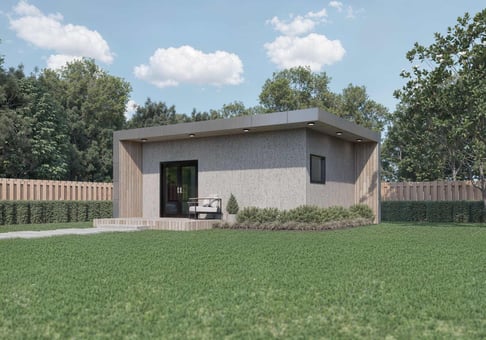
.jpg?width=477&height=334&name=Modern%20custom%20ADU%20with%20wood%20siding%20and%20flat%20roof%20by%20Smart%20Spaces%20ADUs%20in%20Brookhaven%2c%20GA%20-%20rendering%20(2).jpg) The arrangement only works if everyone has genuine independence, and that's exactly what a detached backyard ADU is designed to provide. With an ADU, you have a separate entrance, a full kitchen, and a private outdoor area. The family member in the ADU isn't a guest in your home, but is like a neighbor right next door.
The arrangement only works if everyone has genuine independence, and that's exactly what a detached backyard ADU is designed to provide. With an ADU, you have a separate entrance, a full kitchen, and a private outdoor area. The family member in the ADU isn't a guest in your home, but is like a neighbor right next door.
This is the key distinction between an attached in-law suite and a detached backyard cottage. An in-law suite, built as an addition to the primary home or above a garage, keeps both households under the same roof or structurally connected. A detached ADU puts physical separation between the two residences. For most families navigating multigenerational living, that separation is what makes the closeness sustainable.
How the unit is sited matters too. Positioning the ADU with its own entrance facing away from the main house, with intentional landscaping between the structures, creates a sense of arrival and independence that goes beyond the floor plan itself.
Design It for Aging in Place From the Start
If the unit is being built for an aging parent, the design decisions made at the outset will determine how long the arrangement actually works. A one-story layout with zero-step entry, 36-inch doorways, a curbless shower, and thoughtful lighting isn't a concession to a parent's limitations. It's good design that protects the investment across decades of use.
Details like blocking in the walls for future grab bars, lever-style door handles, and slip-resistant bathroom surfaces cost very little to include during construction and a significant amount to retrofit later. Build them in now, and the unit stays functional without a second project down the road.
Atlanta's 750-square-foot limit is enough space for a comfortable one-bedroom layout with a full kitchen and a covered entry. A well-designed 650-square-foot ADU built for aging in place can function far better than a poorly planned 900-square-foot unit that ignores accessibility from the start.
And the space doesn't have to serve the same purpose forever. The parent suite that works for a 72-year-old today can transition to housing an adult child, a caregiver, or a long-term rental tenant when circumstances shift, without you needing to make any structural changes.
It's Not Only for Parents
The multigenerational ADU conversation tends to center on aging parents, but adult children are increasingly the ones moving in. Atlanta's housing market has made renting expensive and buying even more so. An adult child living in a backyard ADU behind the family home gets a stable, affordable place to land, and the family keeps everyone on the same property without living on top of each other.
Adult children gain the stability of a home while working toward their own financial goals, and for seniors, having family nearby means built-in companionship and the security of knowing someone is close. The ADU functions as a transitional space that meets a variety of needs.
What Atlanta's Zoning Actually Permits
Atlanta allows detached ADUs on R-4, R-4A, and R-5 zoned lots without a special variance or rezoning. The unit must be a fully self-contained residence with a kitchen, bathroom, sleeping area, and a separate entrance. Detached ADUs are subject to a 25% rear yard coverage limit and a 20-foot height cap, and typically offer the most privacy and the strongest long-term appeal.
The size for ADUs is capped at 750 square feet or 50% of the primary home's heated floor area, whichever is smaller. There is no owner-occupancy requirement, so a parent, adult child, or any family member can occupy the ADU regardless of whether the homeowner lives in the primary residence.
One constraint that catches families off guard is that the ADU cannot be subdivided or sold as a separate parcel. It stays part of the primary property, which matters if you're looking into estate planning.
Frequently Asked Questions
Can my aging parent live independently in a backyard ADU? Yes, and for most parents who are healthy or in early-stage care needs, the backyard ADU provides more independence than assisted living. They maintain their own space, schedule, and routines, with family a short walk away.
Is building an ADU cheaper than paying for assisted living in Atlanta? Over time, almost always. Atlanta assisted living runs $4,200 to $5,000 per month. A detached ADU costs $150,000 to $250,000 on the higher end, and many families recoup the cost within three to four years compared to facility costs.
How do I design an ADU that works for aging in place? Prioritize a single-story layout, zero-step entry, 36-inch doorways, a curbless shower, and lever hardware throughout. These features add little to construction cost and significantly extend how long the space functions without modification.
What size ADU works best for a single parent or elderly relative? A 600–750-square-foot one-bedroom layout is the most common and practical choice. It provides enough space for comfortable daily living without requiring more maintenance than one person wants to manage.
Do adult children also use ADUs in Atlanta? Yes. Rising housing costs and the flexibility of the backyard ADU make it a practical option for adult children who want independence without the expense of Atlanta's rental market.
How much privacy will my parents actually have in a backyard home? A detached ADU functions as a completely separate home. With its own entrance, kitchen, and outdoor space, your parents' daily life doesn't intersect with yours unless both of you choose it.
Can the ADU serve a different purpose later if care needs change? Yes. A well-built ADU can transition from a parent suite to an adult child's apartment to a long-term rental without structural changes, which is one of the strongest financial arguments for getting the design right from the start.
What's the difference between an in-law suite and a detached backyard ADU? An in-law suite is attached to or structurally connected with the primary home. A detached ADU is a fully separate structure with its own foundation, utilities, and entrance. For families that are prioritizing privacy and independence, detached works better.
Does having a family member in an ADU affect my homeowner's insurance? Typically, yes, since adding a structure increases your insured value and may require a policy update or rider. Talk to your insurance provider before breaking ground.
How do I have the conversation with my parent about moving into a backyard home? Lead with the benefits and how a backyard home gives everyone what they need. Most parents respond well if you highlight that they will have their own space, their own schedule, and proximity to grandchildren, without being monitored or stripped of autonomy.
Ready to Build a Backyard Home for Your Family?
 A backyard home is one of the most personal projects a homeowner can take on, and one of the most practical. Everyone gets the space and independence, and you boost your home's value.
Smart Spaces ADUs has years of experience helping Atlanta families navigate these decisions and build the best ADU for their situation. We handle the full process: design, permitting, and construction, with no handoffs between contractors and no gaps in accountability.
Browse our project portfolio to see what we've built for families across the Atlanta metro. We can't wait to do the same for yours.
Contact Us
Reach out to our team to start the conversation. We'll look at your lot, talk through what your family actually needs, and give you a straight answer on what's feasible. ADU plans and financing options are ready to review whenever you are.