
5 Min Read
.jpg?width=960&height=480&name=Smart%20Spaces%20ADU%20(8).jpg)
As housing needs evolve and property values rise across Metro Atlanta, homeowners are increasingly looking for smart ways to expand. Two of the most popular options are building an Accessory Dwelling Unit (ADU) or adding onto the existing structure. But when it comes to ADU vs home addition, which delivers the better return? And which one makes sense for your property?
In this guide, we'll compare the benefits of home additions vs backyard ADUs, answer the question “Is an ADU a good investment?”, and help you determine the right path for your Atlanta home.
What’s the Difference? ADU vs Home Addition
Before comparing value and ROI, it’s important to understand what sets these two options apart.
Accessory Dwelling Units (ADUs), also known as backyard cottages, guest houses, or in-law suites, are self-contained residential units built on the same lot as a primary home. A backyard ADU typically includes a kitchen, bathroom, and private entrance, making it ideal for generating rental income, housing aging parents, or creating a separate home office.
Home additions, on the other hand, are extensions of your existing structure. This could mean adding a new bedroom, bathroom, expanded kitchen, or bonus room. While these spaces offer more integrated living, they’re generally not intended for independent occupancy.
Here's how they compare:
|
Feature |
ADU |
Home Addition |
|
Independent living space |
✅ |
❌ |
|
Rental income potential |
✅ |
❌ |
|
Adds square footage |
✅ |
✅ |
|
Shared utilities and structure |
❌ |
✅ |
|
Zoning/permitting complexity |
Moderate |
Moderate |
In Atlanta, both options are feasible, but your decision may depend on zoning laws, lot size, and how you plan to use the space. Smart Spaces can help you evaluate your options to know if you can add an ADU to your property. Read more about Our Process and how we help you find the right solution for your space.
Cost Comparison: ADU vs Addition in Atlanta, GA
One of the most important things to consider when looking at a home addition vs an ADU is the price tag. Let’s break down the costs of ADUs vs home additions in the context of the Atlanta market.
How Much Does It Cost to Build an ADU?
The accessory dwelling unit cost in Atlanta typically ranges between $80,000 and $200,000, depending on the size, location, level of finish, and whether you’re building a detached backyard ADU or converting an existing structure like a garage.
Key cost factors include:
- Foundation and framing (especially for detached units)
- Utility connections and new meters
- Full kitchen and bathroom installation
- Permitting and zoning compliance
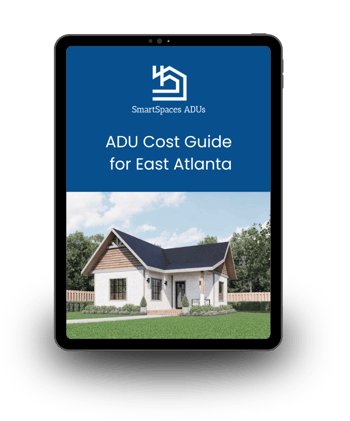
Learn more about the cost to build an ADU in our Cost Guide.
How Much Does It Cost to Build a Home Addition?
Building a home addition is often slightly less costly upfront, with average costs ranging from $125 to $250+ per square foot. A standard 400-square-foot room addition, for example, may run between $60,000 and $100,000.
Home additions don’t require separate plumbing or HVAC systems (unless you're adding a bathroom or kitchen), and they often connect to existing utilities, making the process somewhat simpler. However, the resale value added is often more linear and less impactful than that of an ADU.
Cost Comparison at a Glance
|
Item |
ADU |
Home Addition |
|
Typical Cost in Atlanta |
$80K–$200K |
$60K–$100K |
|
Includes Kitchen and Bath |
✅ |
❌ (usually) |
|
Utility Independence |
✅ |
❌ |
|
Zoning Complexity |
Moderate |
Low–Moderate |
|
Value Increase Potential |
High |
Moderate |
While the initial investment for an ADU may be higher, the long-term financial upside, especially when considering ADU ROI from rental income and property value gains, often surpasses that of a traditional addition.
Investment Potential and ROI
When evaluating home addition vs ADU projects, it's not just about upfront costs: it’s about long-term value. Is an ADU a good investment? For many Atlanta homeowners, the answer is yes.
How Much Does an ADU Increase Property Value?
According to recent market analysis, homes with ADUs in Atlanta may see a property value boost of 20 to 35%, especially in neighborhoods where flexible living or rental space is in high demand.
This increase is due to several factors:
- Independent living quarters appeal to multigenerational families and renters.
- ADUs offer potential for short-term or long-term rental income.
- Buyers see more flexibility in the property, which can increase competition and the sale price.
These factors make it one of the best ROI remodels that Atlanta homeowners can make.
Which Adds More Value: ADU or Addition?
Let’s break down ADU ROI versus Atlanta home addition ROI:
|
Investment Type |
ROI Range |
Rental Income Potential |
Added Resale Value |
|
ADU |
60–100%+ |
$1,200–$2,500/month (avg. in Atlanta) |
High |
|
Home Addition |
50–70% |
None (typically) |
Moderate |
While home additions like an expanded kitchen or extra bedroom can definitely enhance livability, they rarely offer a direct revenue stream. In contrast, ADUs provide immediate and recurring financial benefits, especially if you list the unit as a rental on platforms like Airbnb or through traditional leasing.
Is Building an ADU a Good Investment in Atlanta?
Yes, particularly if you’re looking for a smart way to generate income, accommodate family, or future-proof your home.
With Atlanta’s evolving zoning regulations becoming more ADU-friendly and the growing demand for affordable, flexible housing, the ADU stands out as one of the best home investments for 2025.
Smart Spaces specializes in helping Atlanta homeowners make the most of their properties. Our team navigates zoning, design, and construction with precision to deliver high-ROI solutions tailored to your lifestyle. We’re here to ensure your investment meets both your needs and the demands of Atlanta’s dynamic housing market.
When to Build an ADU vs an Addition
Choosing between an ADU vs a room addition in Atlanta depends on your goals, lot size, family needs, and long-term plans. While both options add value, each is better suited to different situations.
Build an ADU When:
- You want rental income to offset your mortgage or supplement retirement.
- You have aging parents or adult children needing an independent living space.
- You want to boost resale value with multifunctional, high-demand features.
- You have a lot that can accommodate a detached or backyard ADU.
- You're interested in one of the best home investments Atlanta homeowners can make right now.
Build a Home Addition When:
- You need to expand your main living space (e.g., larger kitchen, master suite).
- Your lot or zoning doesn’t allow a separate structure.
- You don’t need a separate entrance or independent utilities.
- You prefer the simplicity of staying within your home’s footprint.
Key Considerations
|
Factor |
ADU |
Home Addition |
|
Goal: Rental Income |
✅ |
❌ |
|
Goal: Livability Expansion |
✅ |
✅ |
|
Lot Size Flexibility |
Needed |
Not Always |
|
Zoning Complexity |
Moderate |
Low to Moderate |
|
Independence |
✅ |
❌ |
|
Use Case |
Multi-gen living, rentals, in-law suite |
Family space, layout upgrades |
Many Atlanta homeowners are increasingly opting for ADUs when flexibility, income potential, and long-term ROI are top priorities. However, a traditional addition may make more sense if you're focused on enhancing your day-to-day living space within the main home.
The Atlanta Advantage: Why ADUs Make Sense Now
Atlanta is quickly becoming one of the most ADU-friendly cities in the Southeast, thanks to shifting housing needs, evolving zoning policies, and a growing interest in multi-use properties. This creates a prime opportunity for homeowners to invest in a backyard ADU or detached in-law suite.
- Changing Zoning Laws Support ADU Growth
Recent zoning updates in several Atlanta neighborhoods make it easier than ever to build ADUs. These changes aim to increase housing availability without altering neighborhood character, encouraging more homeowners to explore flexible options like detached ADUs or garage conversions.
- High Demand for Affordable, Flexible Housing
Atlanta’s booming population and rising home prices have led to a surge in demand for secondary housing. ADUs fill a crucial market gap for:
-
- Young professionals seeking affordable rent near the city
- Aging parents in need of nearby care
- Homeowners wanting extra income without selling their property
- Strong Return on Investment in 2025 and Beyond
As home values continue to climb and rental demand stays high, ADUs offer one of the best home investments for 2025. Their self-contained nature allows for consistent cash flow and property appreciation, making them a standout solution in Atlanta’s evolving real estate landscape.
- Support for Multigenerational Living
More families are choosing to live under one roof, or at least on one lot. An ADU offers privacy and independence while keeping loved ones close, a major benefit in today’s world of remote work, elder care, and flexible family dynamics.
If you’re weighing a room addition vs an ADU in Atlanta, the city’s trends and regulations make now an ideal time to consider building a separate, income-producing unit on your property.
Make the Smart Investment for Your Atlanta Home
Choosing between building an ADU vs adding a room is a financial one that can shape the future of your property. For homeowners focused on flexibility, long-term ROI, and increased property value, a backyard ADU often delivers unmatched advantages. From rental income potential to multigenerational living, ADUs are quickly becoming one of the best home investments in Atlanta.
Smart Spaces guides you through every step from zoning assessments to construction, so you can confidently invest in the solution that works best for your lifestyle and your lot.
Ready to find out if an ADU is right for you?
Contact our team for a personalized property consultation. Let’s unlock the full potential of your home.
.jpg?width=352&name=Smart%20Spaces%20ADU%20(6).jpg)